
Every year, millions of home appliances move through manufacturing plants, warehouses, distribution centers and retail networks before reaching end users. While damage during handling has traditionally been considered an unavoidable part of logistics operations, increasing cost pressures and sustainability goals are driving companies to adopt a different approach. Rather than focusing solely on managing damage after it occurs, many organizations are looking at how to prevent it from happening in the first place.
The value of intelligent handling systems
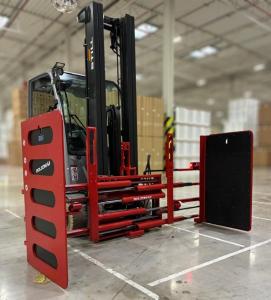
A significant share of product damage originates during material handling and storage operations. In the home appliance industry, forklift trucks are commonly equipped with carton clamps specifically designed to move white goods safely and efficiently. Building on decades of expertise, Bolzoni Group has developed a new generation of intelligent carton clamps that automatically adjust grip settings according to load size and configuration, helping operators apply the correct clamping force consistently and reducing variability in handling operations.
The Easy-MOVE 4.0 intelligent carton clamp combines advanced sensors, automatic control systems and IoT connectivity to optimize load handling in real time. The system minimizes both load instability and excessive clamping pressure, two of the main causes of product and packaging damage, while improving operational consistency, safety and efficiency. In addition, remote fleet monitoring capabilities provide logistics managers with valuable operational data, utilization information and predictive maintenance support.
Measuring the return on damage prevention
To help companies evaluate the financial benefits of damage prevention, Bolzoni Group has developed the Easy Move Investment Analysis, an online ROI tool designed to quantify the economic impact of adopting intelligent handling technology. By entering operational data, companies can estimate current damage levels, calculate potential cost reductions, determine savings per unit handled and evaluate expected payback periods based on their specific applications.
A proactive approach to logistics performance
The transition from damage management to damage prevention represents more than a technological upgrade. It reflects a broader shift toward proactive logistics strategies that prioritize product protection, operational efficiency and sustainability throughout the supply chain. By reducing damage, companies can lower costs, minimize waste and create greater value across their operations.
 Brasile
 Canada
 United States
 Other Countries
 Australia
 PR China
 Japan
 India
 Indonesia
 Malaysia
 Thailand
 Vietnam
 Singapore
 Republic of Korea
 Sri Lanka
 Belgium
 Finland
 France
 Germany
 Italy
 Luxembourg
 Netherlands
 Poland
 Spain
 Sweden
 United Kingdom